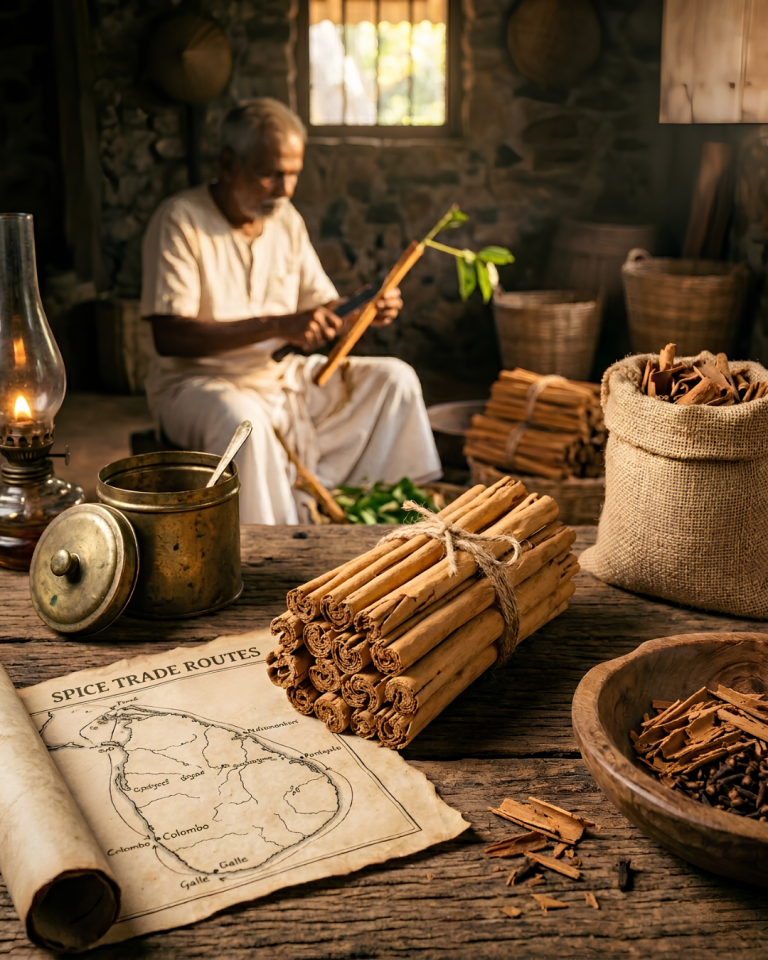
The story of Ceylon cinnamon stretches back thousands of years, making it one of the world’s oldest and most treasured spices. Native to Sri Lanka, Ceylon cinnamon has long been valued for its distinctive aroma, delicate flavor, and rarity.
Historical records show that cinnamon was traded across ancient civilizations, including Egypt, Rome, and the Middle East, where it was considered a luxury product. It was used not only in food but also in perfumes, religious ceremonies, and traditional practices. Because of its high value and limited availability, cinnamon was once regarded as a spice fit for royalty and wealthy merchants.
Sri Lanka’s connection to cinnamon became especially important during the global spice trade. The island’s favorable climate and fertile soil produced high-quality cinnamon that attracted traders from around the world. Over time, Portuguese, Dutch, and British colonial powers sought control of Sri Lanka’s cinnamon trade due to its economic importance.
Despite centuries of changing trade routes and markets, the traditional method of harvesting and hand-rolling Ceylon cinnamon has remained largely unchanged. Today, authentic Ceylon cinnamon continues to carry the legacy of Sri Lanka’s rich spice heritage, connecting modern kitchens with a history that spans generations and civilizations.